



The received wisdom is that electric vehicles (EVs) require less maintenance than petrol and diesel cars due to their component makeup.
That’s evidenced by the fact there’s an average annual workshop revenue shortfall of £175 per EV, compared with internal combustion engine (ICE) vehicles, according to ADS.
Yet industry-wide research has revealed there are certain parts of an EV that typically require maintenance sooner than internal combustion engine vehicles, such as tyres and suspension, as a result of their heavier weight, writes Alex Wright.
Their extensive technology and systems also requires regular calibration and maintenance.
That’s where franchised dealerships can better serve and retain their customer base, add new revenue streams and increase their margins.
Several dealers have already realised this sales opportunity, including Arnold Clark, which has partnered with battery diagnostics specialist Moba to introduce EV battery health certificates as part of its aftersales service.
So what are the key aftersales needs of EV customers? And what can dealers do to deliver on this, while continuing to educate the customer and ensure repeat business?
Contrary to the view that EV aftersales as a business is disappearing, John Colinswood, CEO of Warranty Solutions Group, said it’s merely evolving.
“One of the most persistent myths in the electric vehicle market is that aftersales demand will decline as EV adoption grows,” said Colinswood. “The reality is quite different. Aftersales is not disappearing, it is evolving into something more complex, more technical and, in many cases, more commercially significant.”
Indeed, Colinswood said Warranty Solutions Group’s claims data shows that while traditional engine-related failures fall away, they are replaced by a combination of wear-and-tear issues and more specialist system faults – many of which can occur in EVs. In that vein, he said that suspension, thermal management systems and auxiliary electronics are now central to aftersales.
Among the most common faults, said Colinswood, are anti-roll bar link failures, which alone account for 9.52% of all EV claims, while lower arm issues represent a further 5.67%. Both, he said, are directly linked to the increased kerb weight of EVs, which places greater and more constant pressure on suspension components.
At the same time, Colinswood said that more complex systems are driving higher repair costs. Air conditioning compressor faults, he said, account for 4.76% of claims, but carry an average repair cost of £1,232 due to their integration within EV thermal management systems. High-voltage charge port issues, he added, make up 4.23% of claims, reinforcing the growing importance of charging hardware and specialist diagnostics.
“This shift underlines a critical point for the industry,” said Colinswood. “EV aftersales is not lower value, it is simply different, requiring a more diagnostic-led and systems-based approach.”
Understanding where EVs require the most attention, said Colinswood, is essential for dealers looking to build a sustainable aftersales model.
“WSG’s data clearly highlights three areas of demand,” said Colinswood. “The first is suspension and chassis components, where increased vehicle weight is accelerating wear in real-world conditions. This is not theoretical – it is reflected directly in claims volumes, with suspension-related faults dominating the top failure categories.
“The second is thermal management. These systems are far more complex than many assume, regulating battery performance, cabin climate and power electronics simultaneously. When faults occur, they are often more expensive due to the interconnected nature of these systems.
“The third is electronics and advanced driver assistance systems. Faults linked to lane assist cameras, steering controls and tyre pressure monitoring systems are increasingly common. For example, TPMS faults alone account for over four percent of claims, while individual component failures such as lane assist cameras can exceed £1,600 to repair in some cases.”
As ProTech MOT & Automotive Academy highlights, Colinswood said that diagnosis has become the defining skill in EV servicing. He added that, as EVs are fundamentally data-led, effective repair depends on interpreting systems rather than simply replacing parts.
“For franchised dealers, the transition to EV aftersales is not about adding new services, it is about building new capabilities,” said Colinswood.
Investment in people
The starting point, Colinswood said, is investment in people. As the industry continues to face a significant skills gap, with only around 26% of UK technicians currently EV qualified, he said that this creates a clear risk as EV volumes continue to grow, particularly given the increasing complexity of the vehicles entering the parc.
However, Colinswood cautioned that qualification alone is not enough. Technician confidence, he said, remains a critical barrier, particularly when working with high-voltage systems. Therefore, he added structured, hands-on training and clear safety processes are essential to building that confidence.
“Process discipline is equally important,” said Colinswood. “EV servicing introduces new operational requirements, from safe isolation procedures to controlled workshop environments. These are not optional adjustments, they represent a fundamental shift in how workshops operate.
“Finally, diagnostic capability must sit at the heart of the aftersales proposition. The cost of misdiagnosis in an EV environment can be significant, particularly where complex systems such as thermal management or charging infrastructure are involved.
“Dealers that invest in these areas will be best placed to deliver efficient, high-quality EV aftersales.”
Despite all this, Colinswood said that one of the biggest challenges facing dealers isn’t technical, but rather behavioural. As many EV drivers still believe their vehicles require little or no maintenance, he argued that they may disengage with aftersales requirements altogether.
While some EVs are proving highly reliable, Colinswood said that repair severity can still be significant when faults occur. Even in reliable vehicles, he said that common repairs such as suspension components, electronics and thermal systems still require ongoing attention.
“For dealers, the opportunity lies in repositioning aftersales around prevention, performance and protection,” said Colinswood.
“Regular health checks, particularly around battery condition and system diagnostics, can help maintain efficiency and identify issues early. Service plans should reflect real-world wear patterns, especially in areas such as tyres and suspension. Warranty products also play a key role in giving customers confidence around higher-cost repairs.
“Maintaining engagement is ultimately about setting realistic expectations and reinforcing the value of ongoing maintenance.”
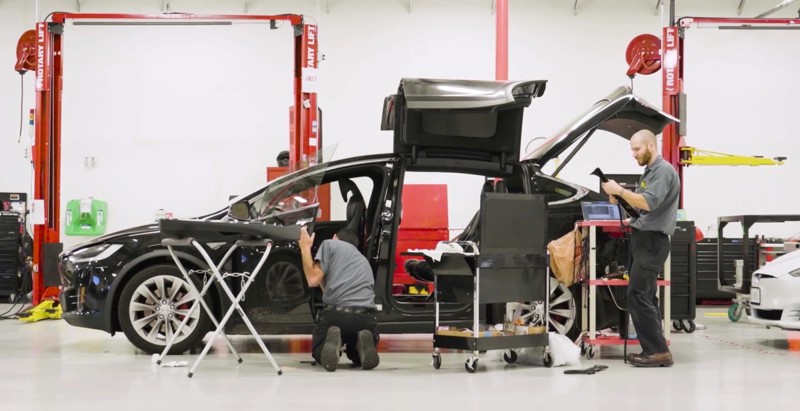 Colinswood added that communication remains one of the most important, and often overlooked, aspects of EV aftersales.
While the industry has spent years promoting EVs as low-maintenance vehicles, he said that this has resulted in a gap between perception and reality. Dealers now, he said, have an opportunity to lead a more informed and balanced conversation.
“EVs may have fewer moving parts, but they rely on complex, integrated systems that still require specialist care,” said Colinswood. “While servicing may be less frequent, the cost of certain repairs can be higher, particularly where advanced electronics or thermal systems are involved.
“WSG’s data clearly shows that EV ownership combines traditional wear-and-tear issues with higher-value electrical faults. This makes clear communication around servicing, diagnostics and protection essential to building long-term customer confidence.
“As ProTech highlights, misconceptions continue to shape behaviour across both the trade and consumers. Addressing these through clear, consistent education will be critical as the market continues to mature.”
The biggest EV aftersales opportunity, said Kevin Parry, group aftersales manager at Bassetts Motor Group, is in providing battery health checks.
“Battery management in EVs is critical,” said Parry. “They are all about the battery and the dealer needs to give the customer peace of mind when they service it that it’s working well.”
Get better at selling tyres, or lose the EV owner
It’s also vital, he said, that they have properly trained staff to carry out the work.
“EVs are highly sophisticated machines that are more like computers today than cars,” said Parry. “That’s why it’s key to have trained technicians who can service them.”
From the view of Quentin Le Hetet, UK country manager at GiPA, tyres represent the most scope for aftersales. According to his research, tyres account for three of the top five MOT failure codes by volume in 2025 for both EVs and ICE vehicles.
“A large part of it is simply educating the customer about the need to ensure their EV is regularly maintained, which includes checking their tyres, which may wear differently to ICE vehicles,” said Le Hetet. “The very fact they make up the majority of the top five failure codes indicates that they should be a key focus.”
Another key area where motor retailers can drive EV aftersales is recalls. Despite only accounting for one in 18 vehicles on the road, EVs make up one in five recalls, according to ADS, giving dealers more chances of direct customer contact.
Colinswood said that the EV market is now entering a more mature phase, where the conversation is shifting beyond range and charging infrastructure towards reliability, repair costs and ownership experience.
“For dealers, this represents a significant opportunity,” said Colinswood. “Those who invest in capability, communicate effectively and build a strong, data-led aftersales proposition will not only protect revenue, but play a central role in supporting the long-term transition to electric vehicles.
“Aftersales is no longer an afterthought in the EV journey. It is fast becoming one of the most important drivers of customer confidence, and one of the clearest opportunities for dealers to differentiate.”
