



The High Court judgment in the battle for control of Big Motoring World is not a simple story of one side winning and the other losing.
While the dismissal of Peter Waddell, the used car group’s founder and former chief executive, for gross misconduct was upheld, the court found that the business’ current chief executive Laurence Vaughan and investor Freshstream partner Reza Fardad breached their duties as directors during a pre-planned drive to remove him.
More importantly, the 499-page judgment shows how legitimate concerns about behaviour became an object lesson in conflicted decision-making.
It documents why Waddell (pictured) failed in his claim that he had been wrongfully dismissed with Justice Marcus Smith finding that several individual incidents amounted to gross misconduct and said the wider picture of Waddell’s behaviour was “deeply unattractive”.
But Waddell’s holding company succeeded in its separate unfair prejudice petition. The court found that the process used to force him out had been shaped around an outcome decided in advance. It also found that Vaughan and Fardad breached the duties they owed as directors of the Big Motoring World group.
That distinction matters. An employee can have committed misconduct serious enough to justify dismissal, while the people directing the company can still act improperly in the way they pursue it. In this case, the judge found both things happened.
Big Motoring World power struggle
Freshstream invested in Big Motoring World in 2022, taking a minority interest while Waddell’s company, Peter Waddell HoldCo, retained the majority stake.
The deal gave Freshstream extensive protections. It could acquire a further 35% of the business through a call option, at a price of at least £72 million, or take effective control of the board by exercising “step-in” rights if specified financial triggers were met. It also had rights if a serious reputational event, described in the agreements as a Material Default Event or MDE, was established.
Vaughan was appointed chair at Freshstream’s instigation in 2022 and later became chief executive after Waddell’s dismissal. Fardad was both a Freshstream partner and a director of Big Motoring World.
Those overlapping roles created the central governance problem. Freshstream was entitled to pursue its own commercial interests as an investor. Vaughan and Fardad, when acting as directors of Big Motoring World, had a different responsibility: they had to act in the interests of the company, avoid unauthorised conflicts and make their own judgments.
The judge described the rule against conflicts as a safeguard against “human frailty”. In plain language, a director cannot simply wear the hat of the shareholder, investor or executive who appointed him. When sitting on the company’s board, his loyalty must be to the company.

A ‘team within a team’
The judgment found that this separation broke down.
As early as October 2022, internal Freshstream papers showed Vaughan and the investor working together to manage Waddell. The judge said they revealed a “team within a team”, with a Freshstream-aligned core inside Big Motoring World exercising more influence than its minority shareholding suggested.
By December 2023, the position had hardened. Freshstream decided not to exercise the £72 million call option. Instead, the judge found, it adopted an undocumented course he labelled “Option 4”.
Under that plan, Waddell’s behaviour would be allowed to continue unchecked until Freshstream was in a position to exclude him from the business. The judge reached that conclusion despite denials from those involved, including Vaughan and Fardad.
An internal email from Fardad referred to a coming “war planning session” involving Freshstream, Vaughan and senior Big Motoring World figures. Witnesses suggested the phrase was an unfortunate choice of words. The judge disagreed.
“It was not,” he said. “It accurately captured the fact that Freshstream and Mr Waddell were actively in opposition to one another.”
The court did not find that every step later taken had already been mapped out. It found something more fundamental: the destination had been chosen. “The objective of replacing Mr Waddell with Mr Vaughan as CEO was decided,” the judge said.
Most troubling from a governance perspective was the decision not to confront Waddell about his conduct. The judgment found there would be no warning because of the risk that Waddell might change his behaviour, making his removal harder.
Misconduct stored for removal
That decision exposed a contradiction at the heart of the case.
If Vaughan and Fardad believed Waddell was bullying or harassing employees, their responsibility was to intervene for the protection of the workforce and the company. If the conduct did not merit intervention, it could not properly be held back as ammunition for a later corporate struggle.
Instead, the judge found that Freshstream “saved up” Waddell’s misconduct to deploy as part of Option 4 in March 2024.
The failure was therefore not simply procedural. It meant behaviour that management considered unacceptable was allegedly permitted to continue because it served a future strategic purpose. On the judge’s findings, the interests of employees became secondary to the battle for control.
Mr Justice Marcus Smith said Big Motoring World and Freshstream had “quite deliberately” rejected the option of addressing the conduct earlier because “neither Big nor Freshstream had any interest in reforming Mr Waddell: they wanted him gone”.
Investigation built around removal
The most serious findings against Vaughan and Fardad concerned the MDE investigation, a contractual process that could unlock important rights for Freshstream.
The process was supposed to involve an independent investigator. Yet Vaughan chaired the committee overseeing it even though he had been involved in planning Waddell’s removal, was a witness to several allegations and stood to become chief executive if Waddell went.
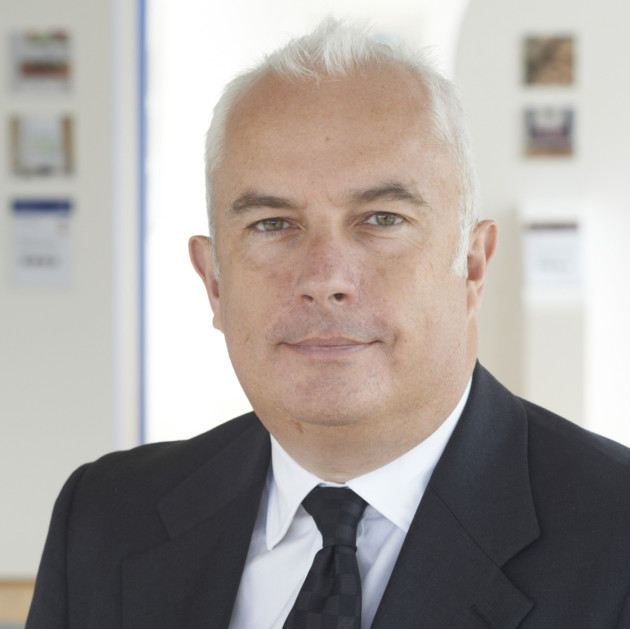 The board resolution appointing Vaughan (pictured) even recorded that he was subject to a conflict of interest. The judgment found he should have managed that conflict by ensuring the other committee members were genuinely independent and by explaining his own interest to them.
He did not. The two other members appointed were also connected to the events and allegations. The judge described them as “parti pris”, meaning they had already taken a side.
His conclusion was stark: “Mr Vaughan was appointed because of and not despite these issues, in order to ensure that the ‘correct’ outcome, the removal of Mr Waddell, was achieved.”
The committee then altered the incidents being investigated, removing some and adding others, although the court found it had no power to do so under the shareholder agreement. The aim, the judge said, “was not to investigate Mr Waddell impartially, but to maximise the prospects of achieving a desired outcome: removal”.
Pressure for a same-day finding
The independence of the external investigator, Andrew Siddall KC, was also compromised, the judgment found.
On 9 April 2024, the committee demanded an initial conclusion that day. Siddall had not interviewed Waddell, had not reviewed all the material and warned that it was “practically impossible” to do so in the time available.
The court found that Vaughan and Fardad had improperly intervened because they wanted an MDE notice issued before threatened legal proceedings could prevent it.
Mr Justice Marcus Smith said the agreed contractual process had been “deliberately circumvented”. He called the acceleration of the investigation “a bad faith attempt” that undermined Siddall’s independence and produced conclusions made in haste which were not findings “in the proper sense”.
The court consequently ruled that both the MDE investigation notice and the later MDE notice were invalid. The exercise of the rights based upon them was illegitimate and unfairly prejudicial to Waddell’s holding company.
Vaughan and Fardad conflicts
The judge found that Vaughan had aligned himself with minority shareholder Freshstream against the majority shareholder and the company’s duly appointed chief executive. In doing so, he acted amid a conflict of interest, lacked good faith and failed to exercise independent judgment.
Vaughan knew the MDE process was a predetermined step towards removing Waddell, the court found, yet caused it to proceed under a surface appearance of regularity. He also improperly pressed for Siddall’s interim report and later acted on a notice he knew should not have been used.
Vaughan’s financial relationship with Freshstream also came under severe criticism. The judge could find no proper basis for a £145,000 payment made under a consultancy agreement and described it as “an illicit payment from Freshstream to Mr Vaughan” for work connected with implementing Option 4 and stepping up early as chief executive. This was a finding in a civil company dispute, not a finding that Vaughan had committed a criminal offence.
Fardad’s conflict was different but no less important. As Freshstream’s representative, he could promote the investor’s interests. As a Big Motoring World director, however, he owed duties to the dealership group itself.
The judge acknowledged that this was a difficult position. “His conflict of interest was hard for him to avoid, but he should have avoided it nonetheless,” he said.
The court found Fardad knew there was no proper basis for starting the MDE investigation, knew the allegations being examined had been improperly changed and took part in pressing for the rushed interim report. Like Vaughan, he acted in conflict, lacked good faith and failed to exercise independent judgment.
Waddell dismissal upheld
None of this amounted to a judicial clearance of Waddell’s conduct.
The court independently examined the allegations and found enough individual incidents of gross misconduct to justify summary dismissal. Waddell therefore lost his wrongful dismissal claim.
Yet the judge placed “no weight” on the reasons Vaughan gave in the dismissal letter because it was the culmination of a process designed to remove Waddell “come what may”.
“I do not consider that Mr Vaughan had any belief in these grounds,” he said. “Nor do I consider that he gave any proper consideration to whether summary dismissal was the appropriate course or not. I find that he was indifferent as to whether the reasons for Mr Waddell’s dismissal were well-founded or not.”
That is perhaps the clearest explanation of why the two findings are not inconsistent. Waddell could be legally dismissible on the facts established by the court, even though Vaughan’s own decision-making process was fundamentally compromised.

Cost of Big Motoring World failings
The judge found a “pre-conceived and orchestrated plan” that worked backwards from the aim of gaining permanent control and removing Waddell without paying to exercise the call option.
The plan was damaging not only because it prejudiced the majority shareholder, but because it left the company divided. The judgment describes “more-or-less open warfare” between rival camps and says the business was run “extremely badly and in a state of conflict, some overt some covert” over a two-year period.
Had the call option been exercised, Waddell’s holding company would have received £72 million for its shares. Instead, the judge said, it had seen the business “lost to strife, with money lost on massive and commercially unproductive litigation”.
Even during the court case, the conflict continued. Vaughan was separately represented while also giving instructions on behalf of Big Motoring World. The judge said his conflict was “obvious” and called it the latest in a series of occasions on which he had succumbed to a conflict in a way that led to breaches of other duties.
The wider lesson for dealership groups is uncomfortable but straightforward. Strong contractual rights do not excuse weak governance. A shareholder may act for itself, but its nominated directors cannot automatically do the same.
Serious employee conduct must be dealt with when it emerges, not stored for use in a future power struggle. Investigations must be genuinely independent, not merely dressed to look independent. And when a director has a personal stake in the outcome, disclosure alone is not enough. The conflict must be removed or controlled.
The judgment’s formal disposal is concise. “Mr Vaughan and Mr Fardad breached their duties as directors in the manner described,” it states. The unfair prejudice petition succeeded, with the consequences to be settled through the court’s subsequent orders.
Ensure you always receive AM insights. Make us a preferred source of news on Google