- Good to drive in refreshingly simple petrol manual form
- Interior features straightforward controls and funky trim elements
- Short on rear seat and boot space
Familiar supermini buyer favourite impresses with nippy drive and useability; less so with space and ride quality.
Overview
The Vauxhall Corsa is one of the real stalwarts of the UK car market. First introduced here in 1993, it has spanned five generations, with the current one introduced in 2019, and facelifted in 2023. A sign of its enduring appeal is that it was the UK’s best-selling supermini in 2025, and the fourth most-registered car overall – it sits fifth on the overall model sales chart so far in 2026.
The Corsa is available with three types of powertrain. There’s pure petrol, with a 1.2-litre engine putting out 100PS; petrol mild hybrid; with a 1.2-litre engine augmented with a 48V system offering either 110PS or 145PS; or fully electric, with a 136PS electric motor and 50kWh or 51kWh batteries offering a range of up to 221 miles and 265 miles respectively. The powertrain line-up is set for further expansion with a 281PS electric option, announced in May with the new Corsa GSE performance variant.
Petrol Corsas come with either six-speed manual or eight-speed automatic transmission. Mild hybrids come with six-speed automatic transmission only. We tested the entry-level option, a petrol manual.
Having seen its long-time rival the Ford Fiesta exit the market three years ago, the Corsa’s main competitors now include the Renault Clio and Toyota Yaris. The Corsa Electric goes up against the likes of the Renault 5 and Nissan Micra. We should also note that the Corsa shares its platform with its Stellantis group cousin, the Peugeot 208.
At the time of writing, Vauxhall is offering the Corsa with 0% APR for up to four years on both PCP and conditional sale with a minimum 20% deposit.
Pricing and spec
For retail customers, the Corsa line-up now consists of Yes, GS and Ultimate trim levels (the previously available Design spec is still being offered to a small number of specialist customers, mainly public sector fleets).
Yes trim – previously a special edition version marketed on offering a relatively high equipment level for the price – comes with standard features such as 16-inch alloy wheels, dark-tinted rear windows, automatic LED headlights and DRLs, air conditioning (climate control with Electric models), heated front seats and a heated steering wheel.
Further features with GS trim include 17-inch alloys, LED taillights, electrically adjustable and heated door mirrors, sat-nav, a wireless smartphone charger and keyless entry and start (Electric only). Oddly GS trim does not come with heated front seats or a heated steering wheel.
Range-topping Ultimate cars come with climate control with all fuel types, alongside a massaging driver’s seat with lumbar support, a rear USB connector, and more extensive ADAS functionality (see Safety section below).
Petrol Corsa prices start at £20,240 for a manual Yes, and rise as high as £28,995 for an automatic Ultimate. Petrol mild hybrid prices run from £22,590 to £30,585, and Corsa Electric prices, including the UK Government’s £1,500 ‘Band Two’ Electric Car Grant, run from £26,005 to £32,945.
The entry point to the Corsa range, the petrol manual Yes spec we tested, undercuts the equivalent Toyota Yaris (which is full hybrid only), and is also narrowly cheaper than the entry-level Peugeot 208. The base Renault Clio, however, is cheaper still.
As for the Corsa Electric, this was previously cheaper than the E-208 – however, after Peugeot implemented price cuts a few weeks ago, this situation has now been reversed. The Corsa Electric is also pricier than the Renault 5 and Nissan Micra.
Service intervals are one-year/16,000 miles for petrol and hybrid Corsas. The Corsa Electric needs a one-year/8,000-mile initial inspection, with subsequent intervals every two years/16,000 miles. Corsas come with Vauxhall’s standard three-year/60,000-mile warranty (eight years/100,000 miles for EV batteries).
Technology
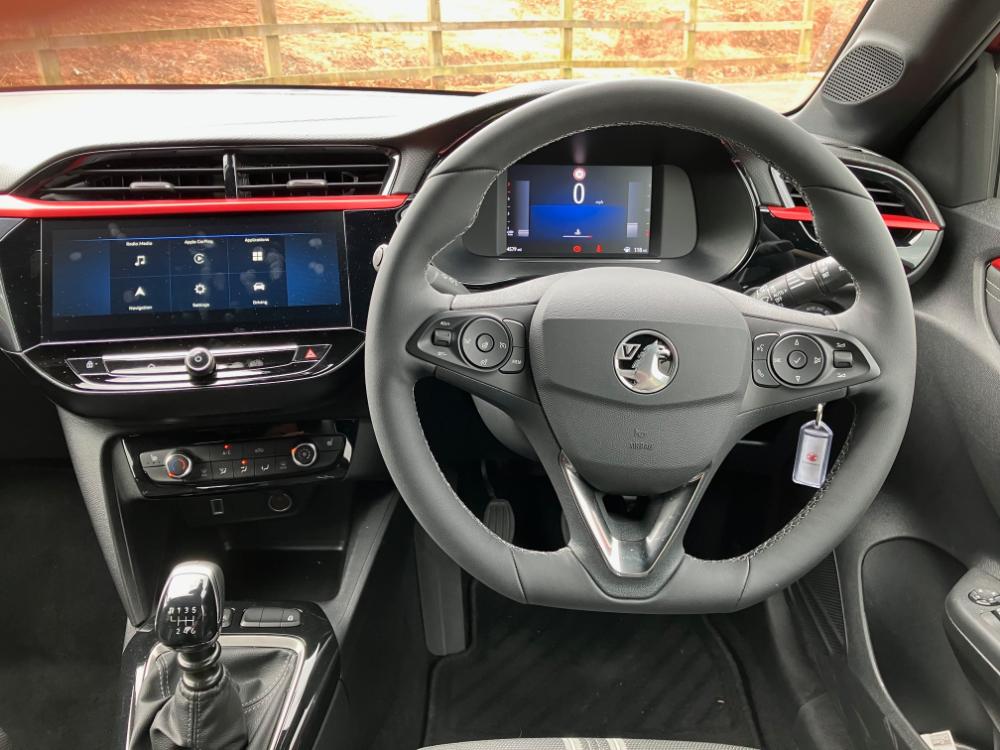
All Corsas come as standard with a 10-inch colour touchscreen. The graphical layout does not make the most of this size, with shortcuts on either side reducing the size of the main view, however relevant information is well displayed and navigation is straightforward, with the relatively small icons on Apple CarPlay (available wirelessly as standard alongside Android Auto) only occasionally proving fiddly. Air conditioning being totally handled by traditional physical controls is a major plus for usability.
A 7-inch digital instrument cluster is standard throughout the current Corsa retail range.
Safety
Standard driver assistance systems with the Corsa include lane departure warning with lane keep assist, speed sign recognition, driver drowsiness alert, automatic emergency braking with pedestrian detection and cruise control with intelligent speed limiter. Further features with range-topping Ultimate trim include enhanced automatic emergency braking, lane positioning assistant (auto only), adaptive cruise control, extended speed sign recognition and side blind spot alert (also included with Electric GS models). Overspeed warnings can be turned off with two presses of the touchscreen.
Yes trim comes with rear parking sensors, which we’d hope would be enough for most drivers with a car of this size, though GS and Ultimate trims also get front sensors and a reversing camera.
The Corsa was most recently tested by Euro NCAP in its pre-facelift form in 2019, when it received four stars out of five.
Driving experience
With the Corsa being relatively light by modern car standards, the 100PS produced by the petrol engine is enough for it to feel nicely nippy both around town and up to motorway speeds. Refinement is pretty good too – the engine isn’t too noisy even under hard acceleration. The manual gearshift action is fairly easy and smooth.
There’s a nice direct feel to the steering, both in urban driving and at higher B-road speeds, and the Corsa handles well, with good levels of grip and body control – if without being the last word in hot hatch-style agility.
We wouldn’t describe the Corsa as the most comfortable small car we’ve ever driven. It’s not unforgivably harsh, but occupants can feel bounced around quite a bit by bumps, and ruts in the road can be quite intrusive, probably not helped by the Corsa’s seats being fairly firm.
Practicality
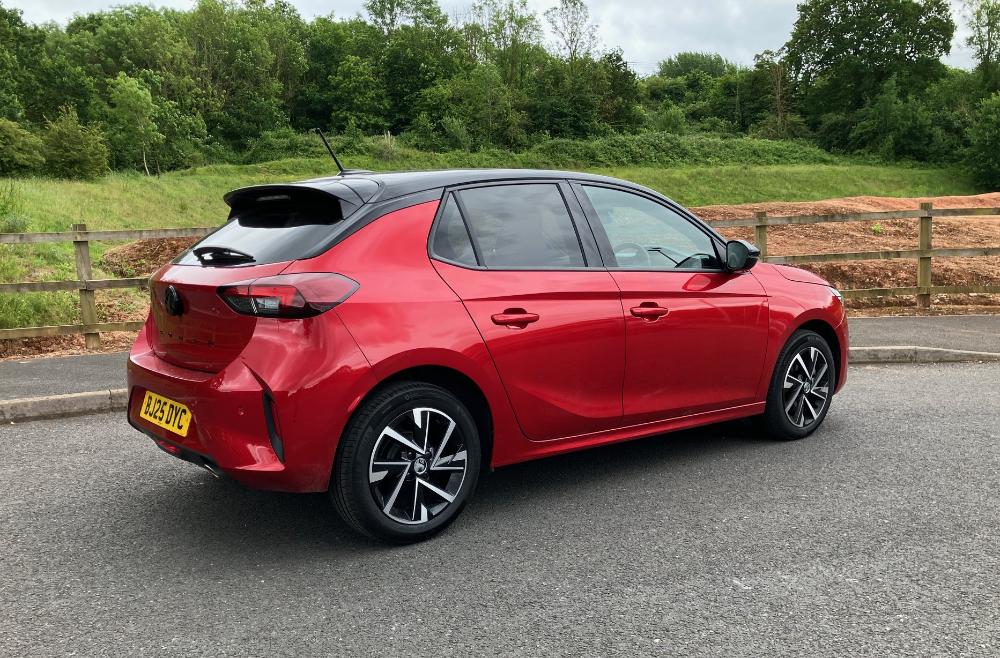
As you’d expect with a new car costing just over £20,000, the spec we tested features some hard interior plastics, but there’s also a good amount of leather and glossy material. We also really like the red flashes of trim which hint at a hot hatch vibe – similar to the effect achieved by the black exterior detailing.
Despite a decent range of driver’s seat adjustment options we found it difficult to settle on a driving position, which we’d attribute to the clutch pedal having quite a long action – we found ourselves having to choose between being a little too close to the pedals or a little too far from the steering wheel. We could also have used more space in the pedal box for our size 11 feet – it took some care not to accidentally kick the footrest when pressing the clutch pedal. We would also have liked a centre armrest (included from GS trim up).
We don’t expect superminis to offer cavernous rear seat space, but would still note that the Corsa is limited in this area – taller adults will struggle to fit in the back, and even more average-sized occupants will only want to do short journeys there.
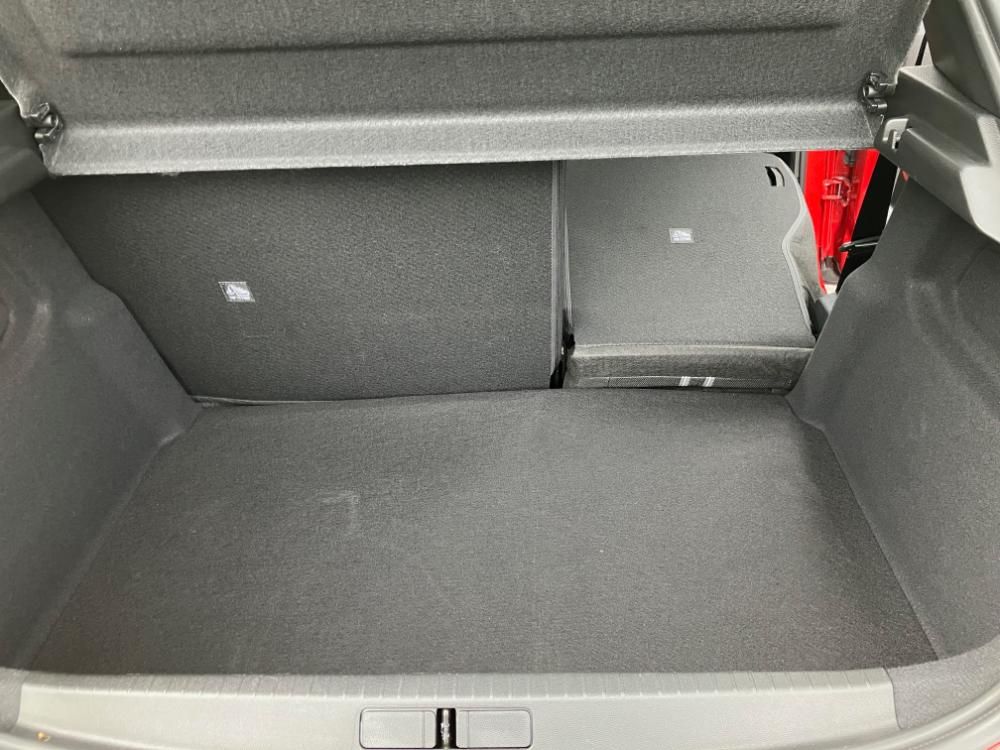
Petrol and mild hybrid Corsas come with a 309-litre boot, which is a little on the small side for the segment (electric versions have a 267-litre boot).
There’s a fairly high load lip, though that’s not unexpected with a supermini, and with the rear seats folded there is a bit of a step up from the main boot floor to the seat backs.