


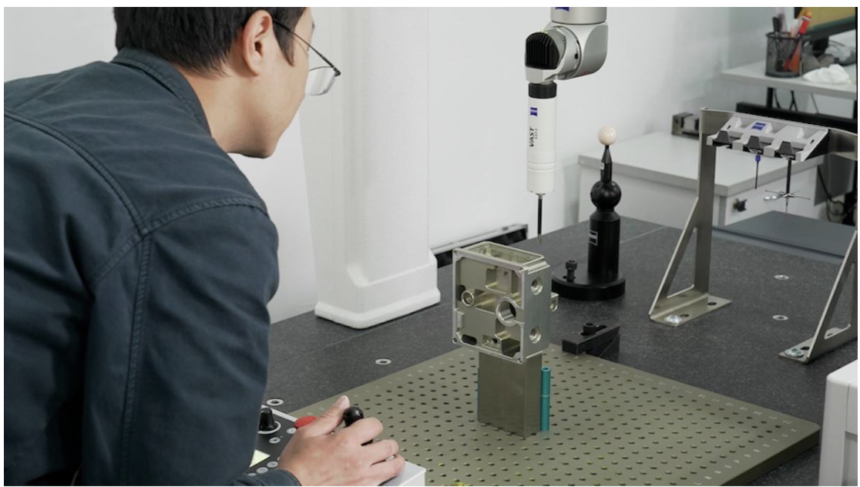
Robotics manufacturers continue to push for higher positioning accuracy, lighter structures, and faster operating speeds. These requirements place greater demands on CNC robot parts machining. Producing reliable metal machined parts requires more than advanced CNC equipment. Material behavior, machining strategy, process control, and inspection all influence whether robot components meet functional requirements from prototype development through low-volume production.
Robotics Parts Demand Higher Precision
Robot assemblies typically use a combination of many precision metal machined parts that have to work together as opposed to using just one highly accurate component. For example; servo motor housings, bearing seats, gear boxes, end effectors, and frame all require different tolerances. In cases where one machined surface does not meet specifications, then other surfaces within the assembly may be out of alignment. This results in position errors, vibration, un-even load distribution or premature wear when the robot operates continuously.
The addition of multi-axis motion increases these precision needs. All rotary joints, intersecting bores, and mating faces must maintain very close geometric relationships while providing smooth motion through various connected components. Because concentricity, perpendicularity, and flatness will greatly affect how well the robotic motion can be repeated over time as well as its long term reliability.
Additional complexity is introduced by lightweight robotic design constructions. Aluminum alloys continue to be used in robotic structure designs due to their ability to significantly reduce weight while maintaining strength. However, aluminum’s thin wall characteristics make it much easier to distort during machining. Residual stresses caused by poor work holding, excessive cut parameters, or improper sequencing of cuts, cause the dimensional stability after machining to be affected by the stresses present at the time of assembly.
While aluminum has excellent machinability characteristics suitable for light-weight robotic frames, stainless steel is ideal for heavy-duty components subjected to significant loads. As titanium provides superior strength-to-weight ratio compared to other metals, it is utilized in applications that require both high-strengths and reduced weights. Due to their differences in response to cutting force, heat generated, and tool wear rates, each metal requires unique machining parameter settings rather than employing a standard manufacturing process.
CNC Machining Strategies for Robotic Components
Robot components with complex designs typically have many important geometric features that need to be maintained in relation to each other. 5-axis CNC machining enables tools to access hard-to-reach features from various orientations in a single set-up. This reduces the number of times the robot is repositioned on the machine table and improves the relationship between mounting surfaces, bearing bores and location surfaces.
Also, inspection has become an integral part of the machining process rather than a separate quality control activity. The measurement of critical geometric features during production allows any errors to be detected prior to the start of subsequent operations. Early detection and adaptive correction will minimize scrap and provide dimensional consistency across all parts manufactured.
The behavior of materials used for robotic components can also affect how they are machined. Aluminum can support faster cutting speeds than most other metals; however, aluminum finishing applications require high-quality work holding in order to maintain dimensional stability. Stainless steel exhibits increased heat generation (and thus increased tool wear) when it is being cut due to its thermal properties; therefore, tool selection and coolants must be properly selected in order to accurately maintain desired dimensions.
These practices are employed by WayKen throughout their robotics projects. Prior to starting production, the engineers examine the geometrical configuration of the individual components, material selection, required tolerances, potential machining difficulties, etc., to identify areas of concern as soon as possible. Once these concerns are identified, WayKen engineers make practical design changes to the components prior to commencing the machining operation.
From Prototype to Production: Ensuring Functional Fit in Robot Assemblies
Prototype development rarely ends after the first successful build. Engineers frequently modify mounting features, reduce weight, tighten tolerances, or change materials after evaluating system performance. Machining suppliers must produce updated parts quickly while maintaining dimensional consistency across every revision. Otherwise, engineering teams spend time correcting manufacturing variation instead of validating product design.
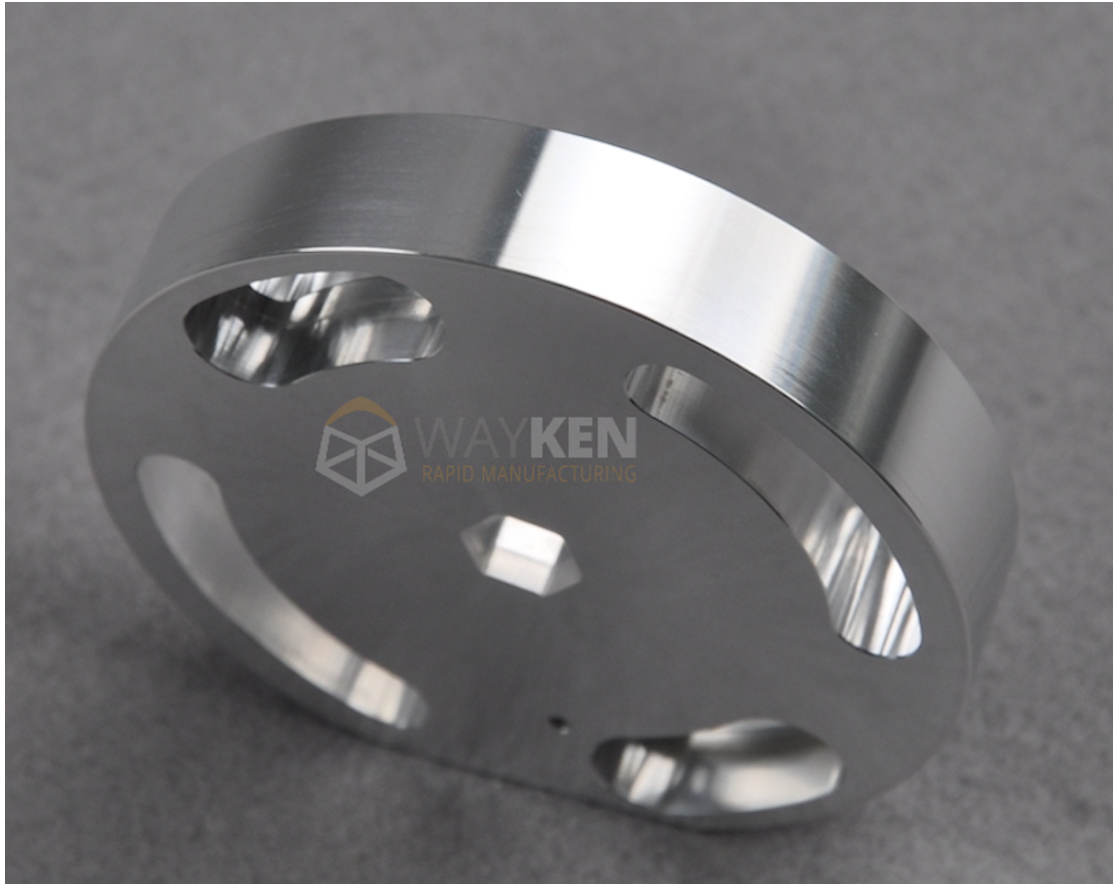
Process consistency becomes as important as machining accuracy. Components produced weeks apart should assemble without additional fitting, allowing design changes to remain the only variable under evaluation. This is especially important for robotic joints, gearbox assemblies, and structural components where several precision parts operate together under repeated motion.
WayKen supports this development cycle by keeping engineering review, CNC machining, and inspection within the same facility. Revised CAD models move directly from engineering into production without supplier transfers or communication delays. Engineers evaluate drawing revisions before machining begins. During production, critical dimensions are verified at key stages to confirm machining remains within specification before work continues.
Conclusion
Precision CNC machining has a direct impact on robotic accuracy, durability, and repeatability. As robotic systems become more compact, lightweight, and mechanically complex, manufacturers need machining processes that maintain tight tolerances from the first prototype through production. By combining engineering review, precision machining, process control, and controlled inspection within one facility, WayKen supports robotics manufacturers with components that assemble correctly, perform reliably, and shorten product development cycles.