


- Updated Google infotainment makes most of small screen
- Flexible boot aids practicality
- Decent to drive, but powertrain choice now limited
A modern-day stalwart of Volvo’s range, the XC40 still has plenty going for it despite a dwindling range of engine options.
Overview
With Volvo having attracted plenty of attention – and sometimes controversy – in recent years with a succession of EV launches, it’s perhaps a surprise that its best-selling model in the UK remains one of its oldest. The XC40 was first launched here way back in 2018, and the same model generation continues to this day, although it was facelifted in 2022 and has received further updates since. Clearly, Volvo has done more than enough to keep the XC40 relevant to buyers, since it was the UK’s seventh best-selling car across the first four months of 2026.
At various times in its life, powertrain options with the XC40 have included petrol, diesel, and plug-in hybrid. Now, however, the only options are petrol mild hybrids – that is, if you discount the fully electric version which used to be sold as the XC40 Recharge, but which is now badged as a separate model called the EX40. The mild hybrid XC40 powertrains are badged B3 and B4, and produce 163PS and 197PS respectively, along with 265Nm and 300Nm of torque. Both come with front-wheel drive and seven-speed automatic transmission. Interestingly, the difference in power output between the B3 and B4 doesn’t correspond to any difference in their official fuel economy and CO2 emissions figures.
Measuring 4,440mm in length, the XC40 is aimed at the premium end of the medium SUV segment, with rivals including the Audi Q3, BMW X1 and Mercedes-Benz GLA.
Pricing and spec
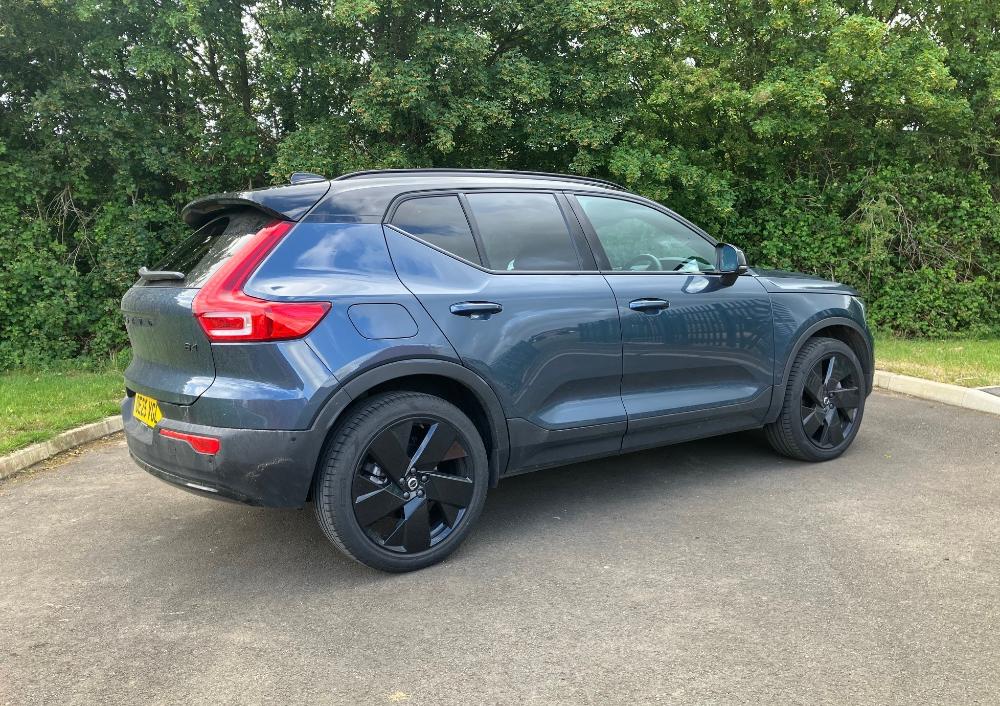
The main XC40 range consists of Core, Plus, Plus Pro and Ultra trim levels. These can then be garnished with Black Edition spec, which adds a black high-gloss finish to elements such as the front grille, badging and alloy wheels. Black Edition is available with the Plus, Plus Pro and Ultra trims – our test car was an Ultra Black Edition model.
OTR prices with the B3 powertrain start at £36,860 with Core trim, and rise to £40,110 with Plus, £42,610 with Plus Pro, and £45,960 with Ultra. Opting for the B4 powertrain adds around £1,200 to these prices, while Black Edition cars incur a similar premium at the Plus and Plus Pro level, although Ultra Black Edition cars only cost £250 more than regular Ultras.
The XC40 Core’s price undercuts the entry-level versions of the Audi Q3 and BMW X1 – but not the cheapest Mercedes GLA, though that has a less powerful engine. Price comparisons are harder further up the range due to rivals having a much greater variety of engine options, but the Volvo looks to be in a similar ballpark.
At the time of writing, Volvo is offering £3,000 off an XC40 with a 4.9% APR PCP, or a 0% APR Volvo Loan. It’s also offering £1,000 off a cash purchase of a Core trim XC40, £1,500 off Plus and Plus Pro, or £2,000 off Ultra.
Technology
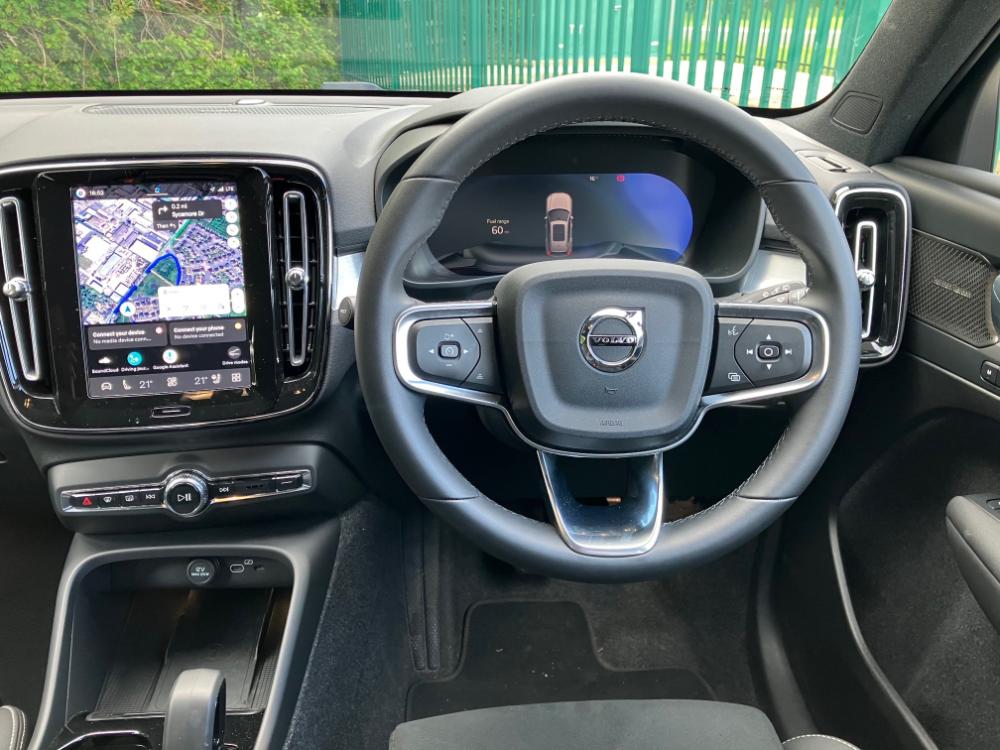
Perhaps the most obvious demonstration of the XC40’s age comes from the standard nine-inch vertical infotainment touchscreen. When the car was launched this looked impressive – now it seems on the small side. We suppose the design of the dashboard with an air vent either side of the screen prevents it being neatly expanded.
Although the screen’s size is unchanged, the operating system it runs is very different. The XC40 gained Google Automotive-based infotainment when it was facelifted, and this was subsequently updated with increased processing power, before another tweak earlier this year which aimed to make it more user-friendly. We’d say this update is a success, with the redesigned system doing a good job of bringing commonly used items to the fore and reducing the need to scroll through a menu packed with small icons – a feature that can be a drawback with Google Automotive systems.
Perhaps another sign of the XC40’s age is that there is no wireless Apple CarPlay or Android Auto connectivity, so if you want to access those platforms a cable will be needed. There is of course Bluetooth, and phones can at least be charged wirelessly.
Climate control is via permanently displayed shortcuts at the bottom of the touchscreen, which are OK to use once you get used to them. A row of physical buttons further down the dash controls windscreen heating and some audio functions.
The XC40 also comes with a 12.3in driver display – a size that feels more up to date. Drivers can choose between two modes to increase or decrease the amount of information displayed.
Safety
Volvo is a brand that has long sold its cars based on their safety equipment. Standard systems with the XC40 include front and rear automatic braking with steering support, driver alertness monitoring. emergency brake assist, lane keeping assist and oncoming lane mitigation.
A single button on the steering wheel allows overspeed warnings to be turned off.
The XC40’s Euro NCAP crash test results date all the way from the model’s launch in 2018, however it did receive a full five-star rating at that time.
Driving experience
Our test car came with the B4 powertrain, with which performance is more than adequate – 0-62mph acceleration is possible in 7.6 seconds. The 48V mild hybrid system assists the petrol engine during acceleration, and also allows it to be switched off when the car is coasting – a function which engages and disengages very smoothly. We averaged 42.6mpg during our time with the car, which was mainly spent on A-roads and motorways and therefore impressively close to the official WLTP combined figure of 42.8mpg. That figure is however worse than equivalent versions of the Audi Q3 and BMW X1 – and additionally, we should note that those models and the Mercedes GLA are available as plug-in hybrids.
The XC40’s powertrain is quite slow to respond – there’s a noticeable hesitation between the accelerator being pushed and forward movement starting, which you need to plan for when doing things like entering roundabouts and overtaking. This slow response also gets in the way of driving enjoyment on a twisty road, as you must wait to be powered out of bends. This is a shame, as the XC40 corners well – there’s a degree of SUV body roll but it’s well managed, and the handling is consistent. As for the steering, the weight of this can be adjusted, allowing drivers to choose between ease of manoeuvring around town and increased confidence at higher speeds. Ride quality we would describe as being on the firm side, although it isn’t abrupt – smaller wheels than the Ultra trim’s 20-inchers would perhaps increase the comfort level.
Practicality
The XC40 wowed with its interior design at launch, and it’s still a nice place to sit, with interesting touches such as the vertical air vents. For a range-topping model, we’d describe our test car’s material quality as decent, though not outstanding. We like the Ultra Black Edition spec’s aluminium door inlays, and the partially recycled suede textile and artificial leather seat trim, which comes in a classy charcoal-with-white-piping colour scheme.
Rear legroom is impressive, helped by there being lots of foot space available beneath the front seats. Headroom is decent even with the Ultra trim’s panoramic sunroof. Interestingly, storage areas are provided at each end of the rear seat bench. With Plus trim upwards the rear seats are also heated.
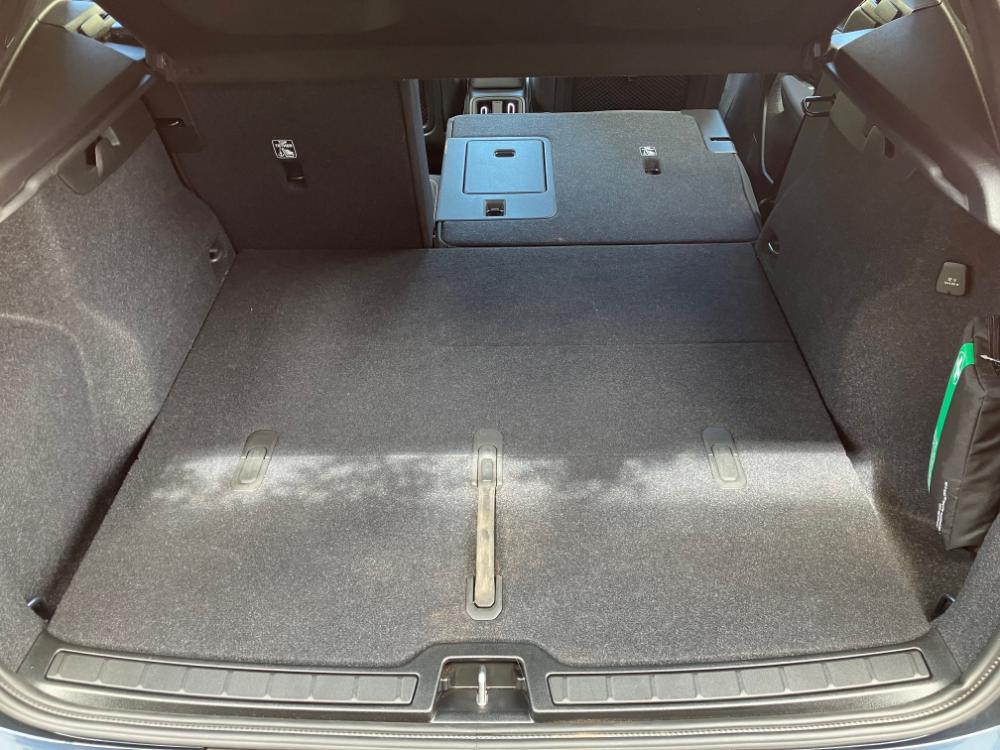
Perhaps drawing on Volvo’s estate car heritage, the XC40 is well designed for carrying luggage, with a flat and low boot lip and flat folding seats. There’s also an additional shallow storage area under the boot floor, and a ski hatch that allows long thin items to be accommodated without folding the seats. All that being said, a capacity of 443 litres with the seats in place in less than that offered by the Audi Q3 and BMW X1.