



2026 looks to be an inflection point for the used car market, not because volumes rebound, but because the underlying mechanics of supply, stock mix and profitability are shifting in ways dealers cannot sidestep.
Shortages to date have been most acute in the 3- to 5-year sweet spot, but in 2026 the shortage is expected to move into the market’s core as weaker registration years from 2020 onwards create volume voids through older age bands.
The result is that the 5- to 10-year cohort is set to tighten quickly, especially in the 5- to 7-year zone, pushing more businesses into fiercer competition at auction and force a heavier reliance on part exchange.
The second force is the mainstreaming of used EVs. EVs have become an unavoidable part of supply, with roughly one in five cars in key cohorts soon to be electric and will reward retailers who have professionalised their used EV offer through training, charging provision, customer education and disciplined pricing.
The third force is profitability, the thread that ties everything together. If volume growth does not arrive, thin returns become a risk rather than a strategy, and dealers will need to actively manage stock scarcity and curate an EV-heavier mix to protect margins.
AM asked several dealership leaders to assess their views on how 2026 is likely to shape up for their business in terms of the used car operation. We spoke to Umesh Samani, chairman of the Independent Motor Dealers Association who runs Specialist Cars and Harris Motor Company, Waylands chief executive John O’Hanlon, Tony Sciascia, managing director at Celtic Auto and Nathan Tomlinson, managing director at Devonshire Motors.
What comes through, quickly, is that 2026 is not being framed as a single turning point, but as a series of unavoidable squeezes. Supply pressure is no longer contained in the familiar 3-5-year corridor while customer behaviour is changing too with people holding onto cars longer, arriving better informed, and expecting faster, smoother transactions.
Meanwhile the economics of stocking, preparing, funding and warranting vehicles have sharpened, especially as older cars become a bigger part of many forecourts and EVs move from strategic ambition to mainstream reality.
If there’s a unifying thread, it’s that process, discipline and confidence will matter more than blind optimism.
Used car supply 2026: shortages move into the core
The first question is where the shortage bites next, and which cars become hardest to replace when the traditional sweet spot thins out. For some dealer groups, brand and programme strength still provides insulation.
John O’Hanlon feels fortunate to be working with brands that have been enjoying strong growth over the last few years and have good finance retention programmes. “Our partners have been controlling the remarketing of much of the supply, and we don’t foresee an issue with younger used cars,” he says.
Even so, the sourcing mix is widening. “In terms of general sourcing,” he says, “we remain focused around part exchange, auctions but also with the newer entrants such as Carwow and Motorway where thousands of cars are on offer.”
For others, the market reality is already visible in the age profile shifting upwards. Nathan Tomlinson at Devonshire Motors describes a supply landscape that has quietly been forcing operational change for some time and he is clear why the pressure isn’t easing:
“Retailers are being forced into older stock not because they necessarily choose to but because PCP volumes, retail part exchanges, and business lease returns are structurally lower than they were pre-COVID. At the same time, consumers are holding onto vehicles for longer due to affordability pressures, higher interest rates, and greater confidence in vehicle lifecycle.”
Older stock, though, is not just “more of the same”. “The challenge is that 5- to-10-year stock behaves very differently. Greater variability in preparation cost, higher risk around warranty exposure and customer expectations, more operational pressure on workshops and parts availability.
Tomlinson says that pushes capability back into the spotlight: “The retailers that cope best are those with strong internal reconditioning control, disciplined buying criteria, and the aftersales capability to deal with not only the reconditioning, but the inevitable and often off-brand warranty and service/repair skills which increasingly means an additional investment in training, tooling and diagnostic equipment.”
Umesh Samani strips it back to the blunt mechanics of a smaller parc: “The biggest challenge is simple: we’ve got to get the stock. There’s still a hole in the market because 2020 and 2021 didn’t register enough cars, so customers ask, ‘Where are all the three-year-olds?’ and the answer is: there aren’t any.”
The knock-on, he says, still hasn’t washed through and points out that, even now, the stock is still short in that four to five-year-old space. And while his own profile stays relatively young, the fear is in being nudged older without adjusting the maths. “Most of my cars are 12 months to five or six years, but the worry is pushing into older bands without pricing in what’s coming next, especially recon costs.”
On where demand outpaces supply, Samani says the absence of that three-year-old cohort continues to distort the market. “Demand is still running into a supply wall because the three-year-old cohort just isn’t there, and even four and five-year-old stock is still short.”
EV demand is also uneven, he adds. “Demand is mixed. Some customers are ready, some aren’t, and the volatility has made a lot of people cautious. It’s very mixed out there and it’s difficult to say what the next big trend is because the market is shifting faster than the old playbook.”
Part exchanges: “gold dust” in a tighter market
If the market is tighter, the natural next question is whether part exchange becomes more important, and what stops retailers turning it into a bigger, more dependable pipeline. O’Hanlon says it has long been a core component for Waylands although notes that consumer expectations and the competitive landscape have shifted. “The ease of part exchange has been challenged with recent changes to Agency models and with the rise of newer online marketplaces,” he says.
Which makes the process itself a new battleground. “Our part exchange process has been optimised,” he reports, “and incentivised to ensure that we buy as many of these cars as possible. We need to let the customers know we are the best buyers of these cars in terms of price and convenience.”
Samani doesn’t disguise how he values the channel. “Part exchange is gold dust.” He is equally direct about why some dealers don’t win enough of it. “The barrier is dealers being idle. They don’t want to do the proper appraisal, so they send people away and then wonder why the stock isn’t coming back.”
He agrees with O’Hanlon: the expectation now is speed and simplicity: “Customers want convenience: turn up, swap over, pay the difference. They’ll pay for that. If you can settle the finance and make it easy, you win the car.”
Even so, he reckons the only route to scale is precision. “Gone are the days of just throwing an average price at it. If you want to scale part exchange, your valuations have to be accurate.”
Sciascia at Celtic sees a flatter national picture for part exchanges, with the share shifting as new entrants dilute volumes for established brands. “Maintaining new sales volumes will be a challenge so while overall numbers of part exchanges will remain consistent, individual numbers will be lower amongst retailers selling non new-to-market brands”
Auction discipline: realism over guide data
As the same vehicles attract more bidders, auction buying becomes a test of restraint and clarity.
O’Hanlon positions the answer as local-market knowledge and consistent control, pointing to his business’ investment in a group used car manager and used managers at siye level to maintain focus and market intelligence, ensuring good discipline is consistent.
 Samani argues the challenge is compounded by the transparency of marketplace data. “Everyone’s fighting for the same cars, and everyone’s looking at the same data. That’s why it gets so challenging.”
For him, the core is margin realism, not the headline buy. “The discipline is making sure there’s margin left after everything you have to do to it. The buying price is only the start.” And he warns against letting guide data do the thinking.
“You can’t be misled by Cap or Autotrader. Sometimes you have to step back and say, ‘What will this actually retail for in the real world?’” His own response has been to opt out of the fight entirely. “I don’t buy from auctions, and I never have. I’ve always built my own sourcing, because I’d rather not fight everybody for the same metal.”
Sciascia, meanwhile, is adapting by looking for differentiation, while acknowledging that “different” carries its own exposure. “We are broadening our stock profile and are searching for vehicles for which there will be less buying competition.”
Used EV retailing strategy is unavoidable
The operational demands of EVs are now a live, practical issue in used supply, not a future project.
O’Hanlon frames Wayland’s approach as intentionally built for this direction of travel. “From day one we set out a plan to be the best retailer for a consumer to buy their electric car from.”
The work, he says, has been broad-based whether this be in terms of in-house education, industry accreditation, partnerships with leading suppliers for EVs or the level of EV stock it carries.
His focus then narrows to confidence-building proof points with state of health test and certification for used car sales, part exchanges and for aftersales customers.
Tomlinson’s view is that the understanding gap remains wide. “Used EVs are no longer niche, but they are still misunderstood by both retailers and consumers. The operational shift is significant with competent processes for battery health, software updates, and manufacturer information mattering far more than age or mileage.”
He is emphatic about the workshop implications: “Workshop competence, tooling, and confidence are expectedly non-negotiable.” And on the sales side, he sees a redefinition of the job. “Sales teams have to educate and support, not just transact.”
Early investment separates the robust from the exposed. “Retailers who have invested early in EV-ready workshops, or who are fortunate to partner with EV-focused brands, already have well trained technicians and transparent customer communication, that seems to be more valuable year on year now.”
And the warning for those who haven’t adapted is as much about trust as it is about trading. “Those who haven’t had that exposure not, just commercially but reputationally, are still able to operate but look increasingly fragile.”
EV confidence, battery health: the readiness gaps
Asked what gaps remain before EVs dominate forecourts, Samani returns to the human factor: belief first, then process. “The hardest change is confidence. Dealers have to educate themselves first, then educate the consumer. If you haven’t got confidence, you can’t sell it.”
He describes the shift in customer engagement as fundamental. “EVs need a different sales conversation. You’re not just selling the car, you’re explaining the use case and taking away the fear.”
Operationally, he also highlights dependence risk when an independent dealership is not the technical authority. “The operational challenge is that you’re still reliant on franchise dealers for certain things. If a car is stuck waiting for a fix or software issue, it’s dead money.”
 Sciascia, by contrast, explains why he is deliberately holding back as resistance is still strong in his local market and misinformation remains a factor.
“We do not have the confidence to buy due to depreciation and a remaining reluctance to buy EV by many consumers. So for now we are keeping a step back until this part of the market stabilises,” he says.
When the conversation turns to risk, the subtext is how quickly decisions can turn expensive, particularly with EV pricing and broader margin pressure.
O’Hanlon argues there’s no mystery, just a need for balance and speed. Even so, he acknowledges exposure to manufacturer movements: “Having lots of late-plate registrations in your stock leaves you exposed to strong manufacturer changes to offers but by maintaining a broader stock mix and turning this stock quickly, you protect yourself from of the vagaries of the market.”
Samani is more cautious about EV volatility and advises discipline and independence from the scoreboard. “The way you protect yourself is not getting brainwashed by the numbers. You simply decide what you can retail it for, what margin you need, and if it doesn’t stack up, you walk away.”
Days to sell: prep capacity becomes hidden lever
If days-to-sell becomes the lever, what slows retailers down is often less glamorous than pricing strategy or marketing spend.
Sciascia brings it back to capacity. “Speed of sale was a big challenge for me in H1 2025. This was caused by a bottleneck in preparation and valeting. We addressed this in H2 by recruiting additional human resource.”
The challenge in 2026 for Celtic Auto will be maintaining that hard-won momentum. “The biggest risk is not having the necessary skilled human resource in my prep areas. Our target is to have all stock valeted and advertised within 3 days and fully prepped in 5 days.”
O’Hanlon points to the operational foundations Waylands has been building and the visibility that comes with better systems.
“In 2025, we spent a lot of time ensuring we have the resources and systems to run an effective used car operation. This led to a 32% increase in our volumes. One of the most valuable changes was our stock control software where we can monitor every car from purchase to sale and identify any blockages.”
Samani meanwhile describes a consumer pace that compresses the old sales window and makes readiness everything. “Customers buy faster now. They ring up, ask if it’s available, and they want to take it. That changes everything. The old window where you could agree a deal and sell add-ons before Saturday pick-up is disappearing.”
He also challenges the assumption that online marketplaces solve the problem. “The biggest slowdown isn’t the portal button. You can boost an advert all you want, but if the car isn’t hitting the right eyeballs, it’s false information.”
The answer, again, is basics and judgement. “Speed comes back to basics: prep the car properly, price it properly, and don’t rely on a score telling you it will sell in 30 days.”
Samani reflects on the twin-hit effect on margin: overpay, then overspend in preparation. “The hardest thing is maintaining margin when everyone’s chasing the same cars. The margin disappears twice now: once when you overpay to buy the car, and again when recon costs bite.”
He adds a warning about the hidden cost of cutting corners. “Dealers cut corners to chase a ‘good price’ badge, and then they pay for it with complaints, rejections, and warranty pain. If you did the job right first time, you wouldn’t have half the issues.”
Overhead drift will also remain a constant threat. Ever increasing overhead costs,
Profitability: resilience-led operations win
When volumes are capped by supply and costs continue to rise, profitability becomes a test of structure and leadership. Tomlinson’s view is that the industry is moving beyond comfort. “If 2026 proves anything, it will be that volume alone is no longer a strategy. Nor is aftersales absorption in the traditional sense.”
He sees profit being won in efficiency, discipline and the ability to spot opportunity without taking reckless risk. “With constrained supply, fragile consumer confidence, and rising costs, profitability is being driven more by cost control and operational efficiency, used car efficiency and opportunity recognition.”
Aftersales remains important, but he reframes what creates value – far more technical value in workshop skills, along with more value placed on quality human interaction.
“The sector is very clearly moving from growth-led, traditional operational models, to resilience-led models where skill and human interaction can create more value.
“Leveraged businesses with bloated overheads, weak data, or unclear strategy will struggle. Those with lean structures, strong leadership teams, vision, and a clear grip on transitional factors will thrive.”
Sciascia reckons, will be the biggest pressure on profitability. “Wage inflation as well as the increases in NI and minimum wage are driving all costs up. Also the need to recruit and retain skilled staff is more important than ever to protect profitability.”
Used car strategy: what dealers risk doing too late
Finally, AM asked what change most dealers will leave until it’s too late and what they should implement now.
Sciascia believes sourcing mindset is the risk point, especially if a retailer leans too heavily on familiar channels. “If dealers rely too much on part exchanges or traditional buying streams, they may well get caught out with a lack of stock. Dealers need to look for alternatives when looking for stock such as locally buying direct from the owner. This will speed up the purchase time and reduce costs.”
O’Hanlon’s advice is straightforward: treat EV as present tense and embed it into the organisation. “We need to recognise that EVs are part of today not tomorrow. Educate your teams, let them drive the EVs and ensure your processes are designed around the needs of an EV customer.”
Samani’s warning is about speed, independence and not becoming passive. “If your stock mix goes out of fashion, you’ve got to read the market and move quicker. If you’re waiting for the market to hand you the stock, you’ll be caught out.”
His prescription: diversify and work the market harder, build alternative sourcing, and market smarter, by using the free social channels on offer.
And he closes where the conversation began, with the value of part exchange and the need to earn it properly. “Don’t think you can pinch part exchanges anymore. You need to step your game up, be fair, and make the process easy, because that’s where the stock is.”
The hardest task in 2026: defend profit while funding capability
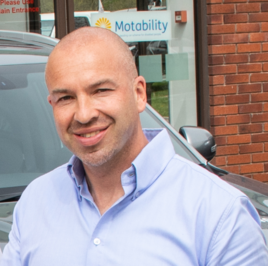 Tomlinson frames his business’ current performance as the payoff of investment decisions over recent years for us: EV capability, stock discipline, skill development and technical expertise in aftersales.
The next phase, he says, is harder because it asks businesses to do two contradictory things at once: defend profitability today while still funding capability for tomorrow.
“What will be hardest in 2026? Sustaining profitability against a backdrop of continually rising cost pressures, while still finding the headroom to invest in the future,” he says.
That sentence sums up the tone from all four perspectives, setting the benchmark for the year ahead. “Ultimately, 2026 won’t reward the biggest retailers – it will reward the best-run ones,” says Tomlinson.
“In the short term, however, the industry will need to reassess what reward actually looks like. We are firmly in the mid-point of transition, and year-on-year comparisons are becoming less meaningful as each successive year diverges further from the last.”