



Volkswagen Group plans to cut its global model range by up to 50%, reduce production capacity and simplify vehicle specifications as part of a major transformation designed to improve competitiveness.
The proposals were presented to Volkswagen’s supervisory board as part of a new “future plan” aimed at making the business more resilient in the face of weaker profitability, rising costs driven by tariffs, increasing regulation and growing competition from Chinese manufacturers.
However, Reuters reported that wider restructuring proposals, including up to 100,000 job cuts and the closure of four German factories, failed to secure supervisory board approval after opposition from labour representatives.
Volkswagen’s official announcement from this board meeting on July 9 made no reference to potential plant closures or workforce reductions.
Under Germany’s co-determination system, employee representatives hold half the seats on Volkswagen’s supervisory board, giving unions significant influence over major strategic decisions.
Reuters reported that labour representatives rejected the more far-reaching proposals during the meeting, meaning negotiations over any future restructuring are expected to continue.
Ensure you always receive AM insights. Make us a preferred source of news on Google
Model range to shrink
Volkswagen said its model portfolio would be gradually streamlined by up to 50% and concentrated on the market segments offering the greatest customer value and commercial return.
At the same time, the company plans to reduce equipment complexity by up to 75%, allowing engineering and development resources to be focused on fewer products and technologies.
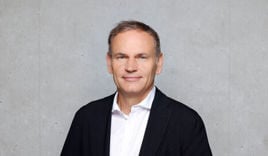 Oliver Blume, chief executive of Volkswagen Group, said the company was entering the next phase of its transformation.
He said: “Our goal is clear: by 2030, we will make the Volkswagen Group the most attractive automotive company in the world.”
Blume said the strategy centred on reducing complexity across the business, focusing investment on key technologies, aligning products and production more closely with regional markets, and removing excess production capacity.
Blume said: “We are making the Volkswagen Group faster, more resilient and more competitive through less complexity, focused technologies and the reduction of overcapacities.”
Volkswagen targets leaner global operations
Volkswagen is targeting annual production capacity of around nine million vehicles across the group.
Before the Covid-19 pandemic, the manufacturer had capacity for approximately 12 million vehicles annually and said further adjustments would follow in Europe and China.
The group also plans to harmonise vehicle platforms, electrical architectures and software systems across western and eastern markets to eliminate duplication, improve economies of scale and accelerate technology development.
Volkswagen said increased use of digitalisation, artificial intelligence and shared services would help simplify structures and improve productivity.
VW needs to go beyond existing cost reduction programmes
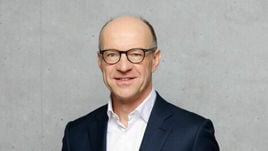 Arno Antlitz, chief financial officer of Volkswagen Group, said the company needed to go beyond existing cost reduction programmes.
He said: “Despite the progress achieved, the cost reductions planned to date under the agreed programs are not sufficient in the current economic and geopolitical environment.”
Antlitz said Volkswagen needed to fundamentally realign its business model by lowering vehicle costs, improving plant efficiency, accelerating technology development and simplifying decision-making.
He added: “We can only achieve this by substantially reducing complexity in our product portfolio and technology platforms, the number of units and decision-making levels.”
Volkswagen has not identified which models or brands could be affected by the planned rationalisation, nor indicated any impact on individual markets.
For the group’s UK dealer network, a smaller global model portfolio would eventually lead to a more focused showroom range, although any changes are likely to be introduced gradually as future product cycles are planned.